

The 6 Guitar String Notes

The 6 Guitar String Notes: Learn the Standard Guitar Tuning
If you’re learning guitar for the first time, one of the most important basics to master is the six guitar string notes. Standard guitar tuning, EADGBE, is the foundation for everything from chords and scales, to riffs and songs.
Knowing the guitar string names, their order, and how they’re numbered, will speed up progress and make your practice sessions smoother and more enjoyable.
What Are the 6 Guitar Strings?
A six-string guitar is tuned to the notes E–A–D–G–B–E, from lowest to highest pitch. These notes make up the standard guitar tuning used in most styles of music. When someone refers to EADGBE, they’re talking about these six guitar string notes.
String Order and Names (EADGBE Explained)
If you’re learning guitar for the first time, one of the most important basics to master is the six guitar string notes. Learning the guitar strings order and guitar notes is foundational for all guitarists. Standard guitar tuning, EADGBE, is the foundation for everything from chords and scales, to riffs and songs.
How to Remember the Guitar String Notes (Mnemonic Tricks)
If you prefer to memorize from high pitch to low pitch (1st string to 6th string):
- Eddie Ate Dynamine, Good Bye Eddie
Creating your own memorable phrase can make it even easier to recall the guitar notes in order. Use whichever one sticks. The goal is to quickly recall the order when tuning or reading music.
Understanding Guitar String Numbers vs. Notes
Beginners often confuse string numbers with string notes. The numbers refer to string position; the notes refer to the actual pitch.
String 6 (Low E): The Lowest Note
The thickest string produces the lowest pitch. It’s the backbone of power chords, heavy riffs, and bass-driven lines.
String 5 (A): The Foundation of Chords
So many essential chords use the A string as their root. It’s important for rhythm playing and building harmony.
String 4 (D): The Mid-Range
The D string sits right in the middle, contributing to the warmth and fullness of many chords.
String 3 (G): The Bright Middle
The G string adds brightness to chords and is often used for melodic fills and solo lines.
String 2 (B): The Melodic String
The B string is a favorite for vocal-like bends, melodies, and lead playing thanks to its lighter tension.
String 1 (High E): The Highest String
The highest-pitched string is where many solos, licks, and top-line melodies live.
How to Tune Your Guitar to Standard EADGBE
Learning how to tune a guitar step by step is essential for clean, accurate playing, and tuning the guitar is just one early step on the fascinating journey of making music. To achieve accurate tuning, we can use various tools such as electronic tuners, tuning forks, or pitch pipes. Tuning to a reference pitch, such as from a tuning fork, ensures your guitar is in perfect alignment with standard pitch.
Using an Electronic Tuner
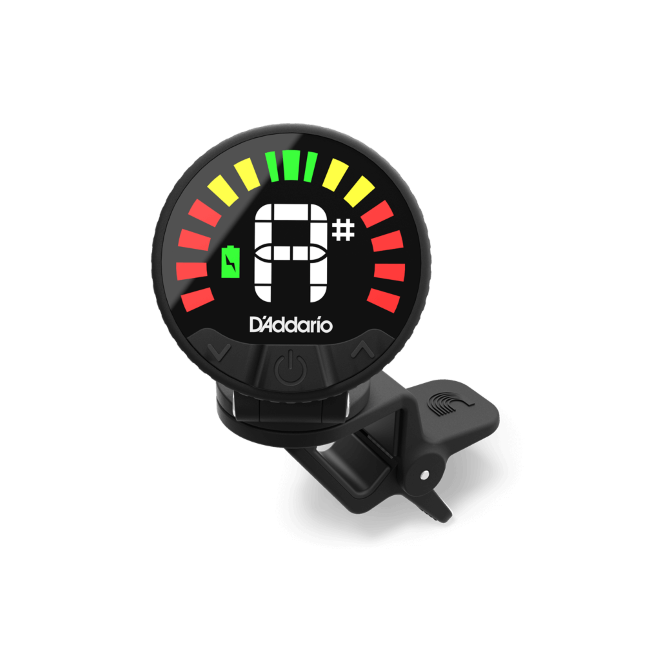
The easiest method for beginners:
- Pluck the string.
- Watch the tuner’s display.
- Tighten or loosen the tuning machine until the tuner reads the correct note (EADGBE).
- If tuning for the first time, use a tuner, tuning fork, a tuner along with a reference pitch from a piano, or an online tool.
- Repeat for all six guitar strings.
This ensures precise tuning every time.
Tuning by Ear
Once you’re comfortable:
Tune the 6th string (E) to a reference note. Use the 5th fret method to tune each remaining string: the 6th string (5th fret) matches the open 5th string. The 5th string (5th fret) matches the open 4th string. The 4th string (5th fret) matches the open 3rd string. The 3rd string (4th fret) matches the open 2nd string. The 2nd string (5th fret) matches the open 1st string. This teaches pitch recognition and strengthens your ear.
Alternate Tunings: Beyond the Standard 6 String Notes
Once you’ve mastered EADGBE, explore several alternative tunings (also called alternate guitar tunings) used by guitarists in different musical traditions, such as:
- Drop D tuning (a dropped tuning where the low E string is tuned down to D for a deeper sound and easier power chords)
- Open G (an open tuning where the open strings form a G major chord, often used in slide guitar, folk, and blues)
- DADGAD tuning (a popular tuning for acoustic guitar, especially in Celtic, fingerstyle, and folk music)
- Half-step down
Alternative tunings are grouped into categories, including dropped tunings like drop D and open tunings, where the open strings form a chord (such as a major chord or open chord). Some open tunings, like C–E–G (g c e), make it easier to play certain chords, such as the C major chord, and facilitate unique chord voicings and melody playing. DADGAD tuning and open tunings are widely used in genres like slide guitar, folk, and blues. Some alternative tunings are even named after the songs that use them.
Recap: 6 Guitar String Notes Chart
E — A — D — G — B — E
(From lowest to highest pitch)
This is your essential guitar string notes chart for all standard guitar tuning.
Final Tips for Memorizing Guitar String Notes
- Repeat the mnemonic every time you tune.
- Say the notes aloud while playing open strings.
- Practice tuning without looking at a reference chart.
- Keep a small string-notes chart in your case for quick reminders.
- Keep at it: the more you tune, the better you’ll get.
Once you have the guitar string names and numbers down, everything else, from chords to scales to riffs, gets much easier.
Please note that these are the standard tuning notes for a guitar, but it is possible to tune the strings differently for various musical purposes or styles. If you’re tuning by ear, you can use this easy trick to get the guitar in tune with itself. Play the 5th fret of the low E, or 6th string. This note is the same as the open A string. You can repeat this process to tune the D string to the 5th fret of the A, the G string to the 5th fret of the D, the B string to the 4th fret of the G, and the high E to the fifth fret of the B string. If you want to be in tune with a band or other musicians, get yourself a tuner!
FOR THIS LESSON